
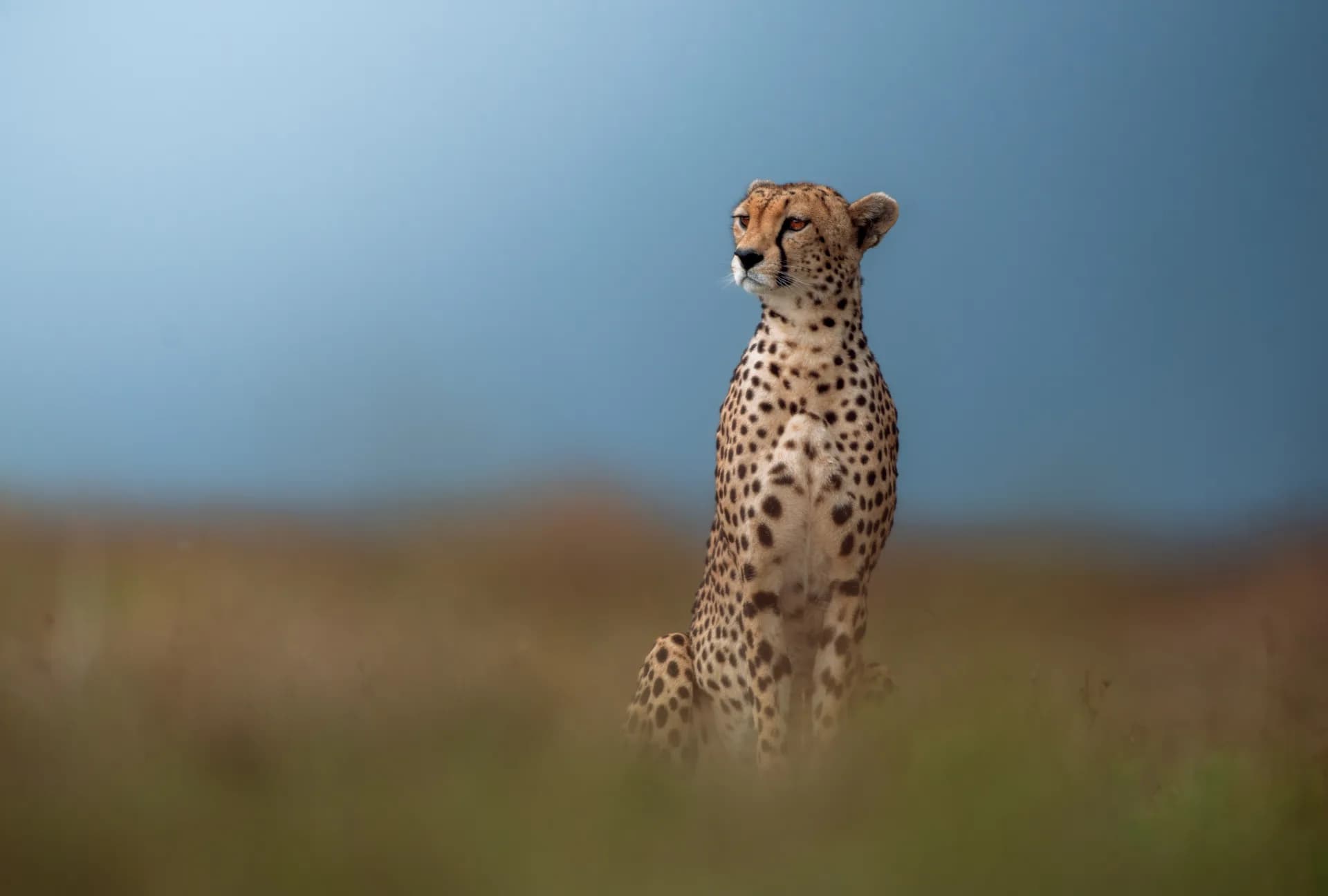
The Serengeti Rewards Timing, Not Luck.
One million wildebeest move through this park on a schedule written by rainfall. Be in the north in August or at Ndutu in February and the Serengeti delivers the scenes you came for — be in the wrong sector and you drive past them. Routing is everything.
Migration-timed routing · Private 4x4 Land Cruisers · U.S. + Tanzania planning team
Quick Answer
Tanzania's Flagship Park, Home of the Great Migration.
Serengeti National Park is Tanzania's flagship safari park — about 5,700 square miles of plains in the country's north and home of the Great Migration.
River crossings typically run July–September in the northern Serengeti; calving around Ndutu peaks January–February. Most private itineraries spend two to four nights here, paired with Ngorongoro Crater and Tarangire.
Park Size
~5,700 Sq. Miles
River Crossings
July–September
Calving Season
January–February (Ndutu)
Typical Stay
2–4 Nights
Why the Serengeti
Why Does Every Tanzania Route Bend Toward the Serengeti?
Serengeti National Park is one of Tanzania's largest parks and a UNESCO World Heritage Site, and it carries the highest concentration of plains game in Africa. More than one million wildebeest, some 200,000 zebras, and hundreds of thousands of gazelles move through it each year — trailed by the predators that make the park famous.
It is also varied in a way photographs rarely show: acacia savanna, granite kopjes, river valleys, and swamps, each with its own resident wildlife. That variety is why the Serengeti works in every month of the year — the question is never whether to include it, but which part of it your dates deserve.
- About 5,700 square miles — larger than Connecticut
- Big Five present; big cats seen daily in Seronera
- Named for the Maasai word siringet, "endless plains"
- Reachable by scenic drive or a 60–90 minute flight from Arusha
The Great Migration
Where Is the Migration Month by Month?
The herds trace a rough clockwise loop through the year, following rain and fresh grass. Your travel dates decide which sector of the park — and which lodges — belong on your route.
January – February
Ndutu & the southern plains
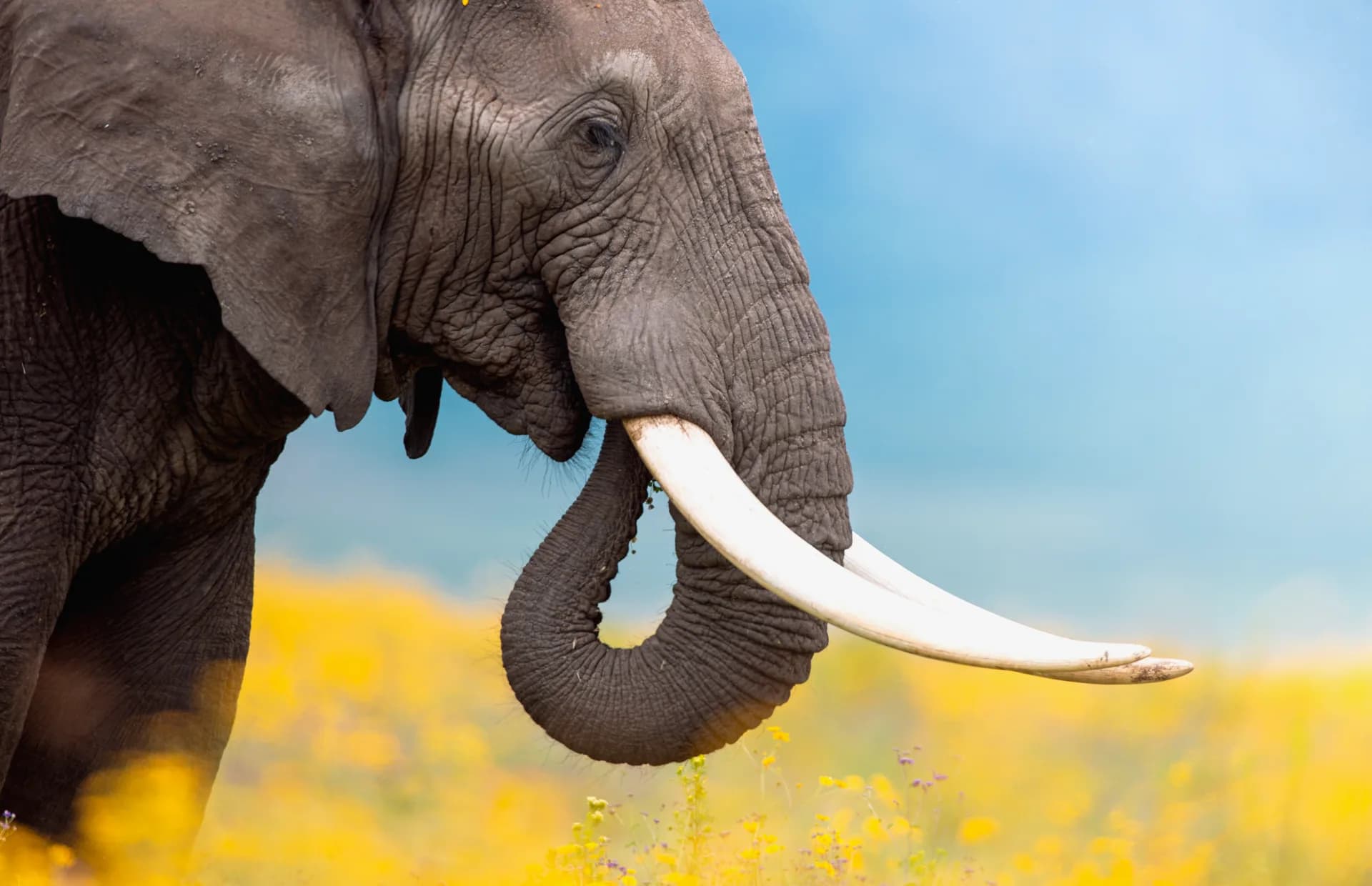
Calving season — roughly 8,000 wildebeest calves born each day at the peak, with lions and cheetahs never far behind. The green season's strongest wildlife window.
April – June
Western corridor
The herds push west and north. Grumeti River crossings begin, smaller and less crowded than the Mara crossings that follow.
July – September
Northern Serengeti
Mara River crossings — the scenes most travelers picture. Timing within these months shifts with rainfall, which is why route flexibility matters.
October – December
Central & eastern plains
The herds swing south again toward Ndutu. The central Seronera Valley stays strong for cats regardless of where the migration sits.
Timing shifts with each year's rains — treat this as a planning guide, not a guarantee.
Timing
When Is the Best Time to Visit the Serengeti?
June through October is the classic answer — dry, cool, and the window for northern river crossings. But the honest answer depends on what you want to see.
Dry season
June – October
Peak game viewing and peak demand. Short grass, animals at water, and Mara River crossings from roughly July. Book 9–12 months out for the best camps.
Calving season
January – February
The southern plains around Ndutu fill with newborn wildebeest and the predators that follow them. Green-season rates, dry-season drama.
Green season
November – May
Lower rates, dramatic light, and far fewer vehicles per sighting. Short rains in November–December; the long rains, March–May, are the quietest months.
Beyond the Migration
What Else Makes the Serengeti Worth the Miles?
Kopjes and big cats
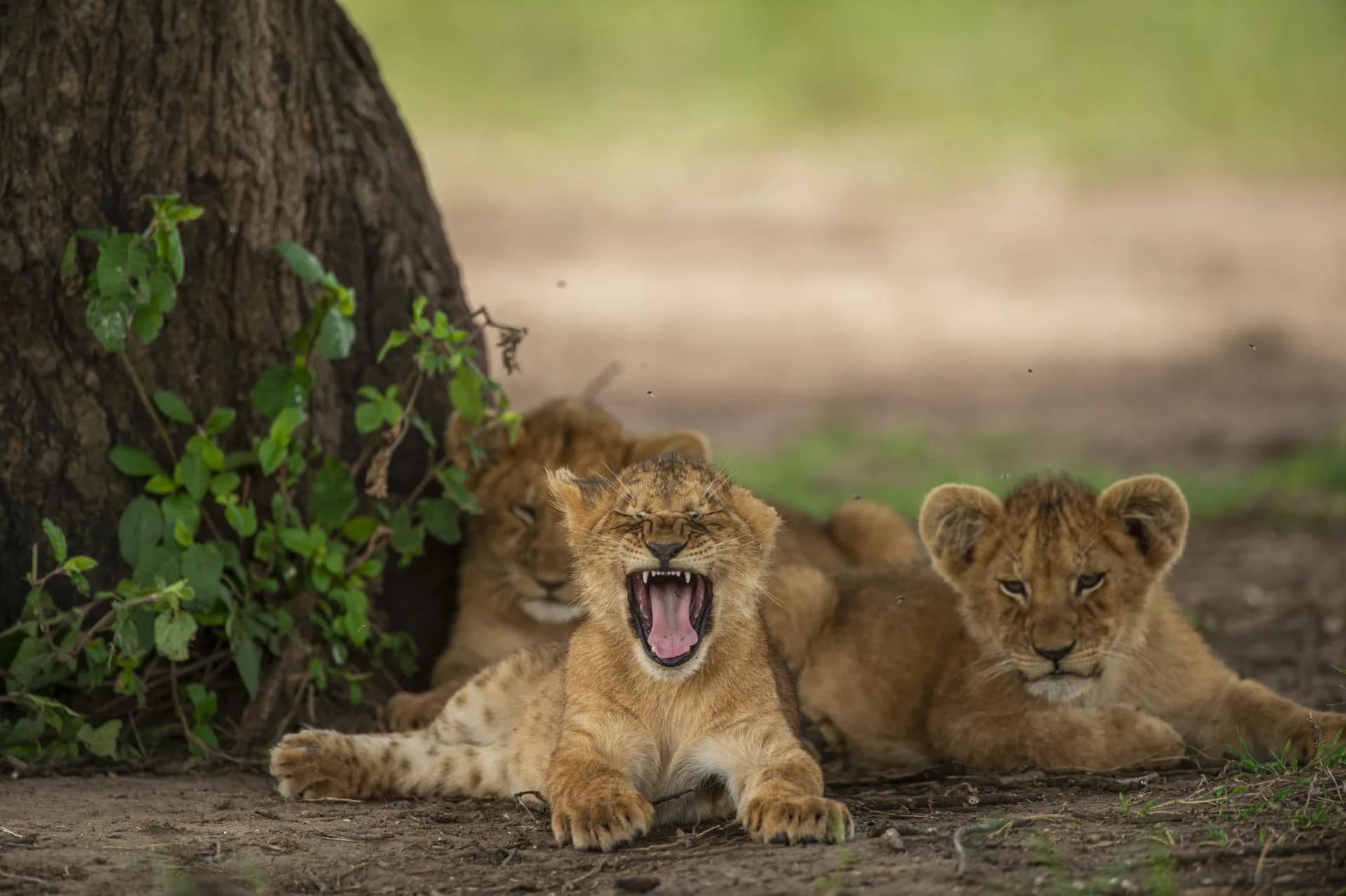
Granite outcrops such as the Simba Kopjes rise from the plains and give lions shade and lookout posts. The Serengeti holds one of the largest lion populations in Africa.
The Seronera Valley
Year-round rivers pull wildlife into the park's center every month of the year — the reason most first-time itineraries base here, migration or not.
Balloon safaris
A dawn flight over the plains, drifting at treetop height while the herds wake below. Booked well ahead; worth planning around.
Endless plains
The name comes from the Maasai word siringet — the place where the land runs on forever. At about 5,700 square miles, the horizon earns it.
Optional Add-On
Optional: Hot Air Balloon Safari
Before dawn, a fleet of balloons lifts off the Serengeti plains and drifts silently over the herds as the sky turns gold — a different vantage on the same landscape you've been driving through. Flights land in a stretch of grass where the crew lays a champagne bush breakfast, table and all, in the open air. It's not part of a standard itinerary by default; it's an optional add-on we build in for travelers who want it, priced separately and best confirmed early since flights are limited and fill months out.
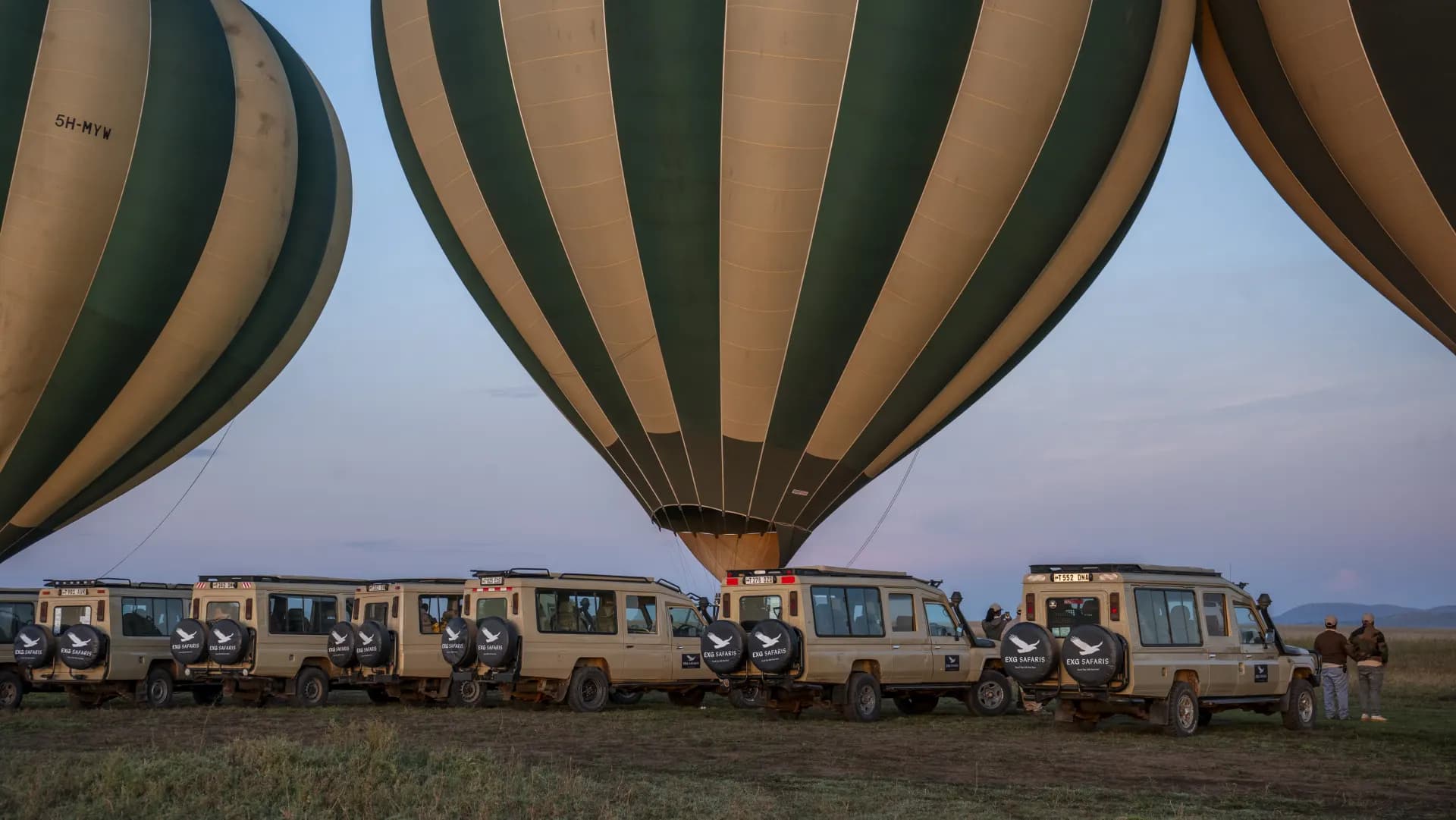
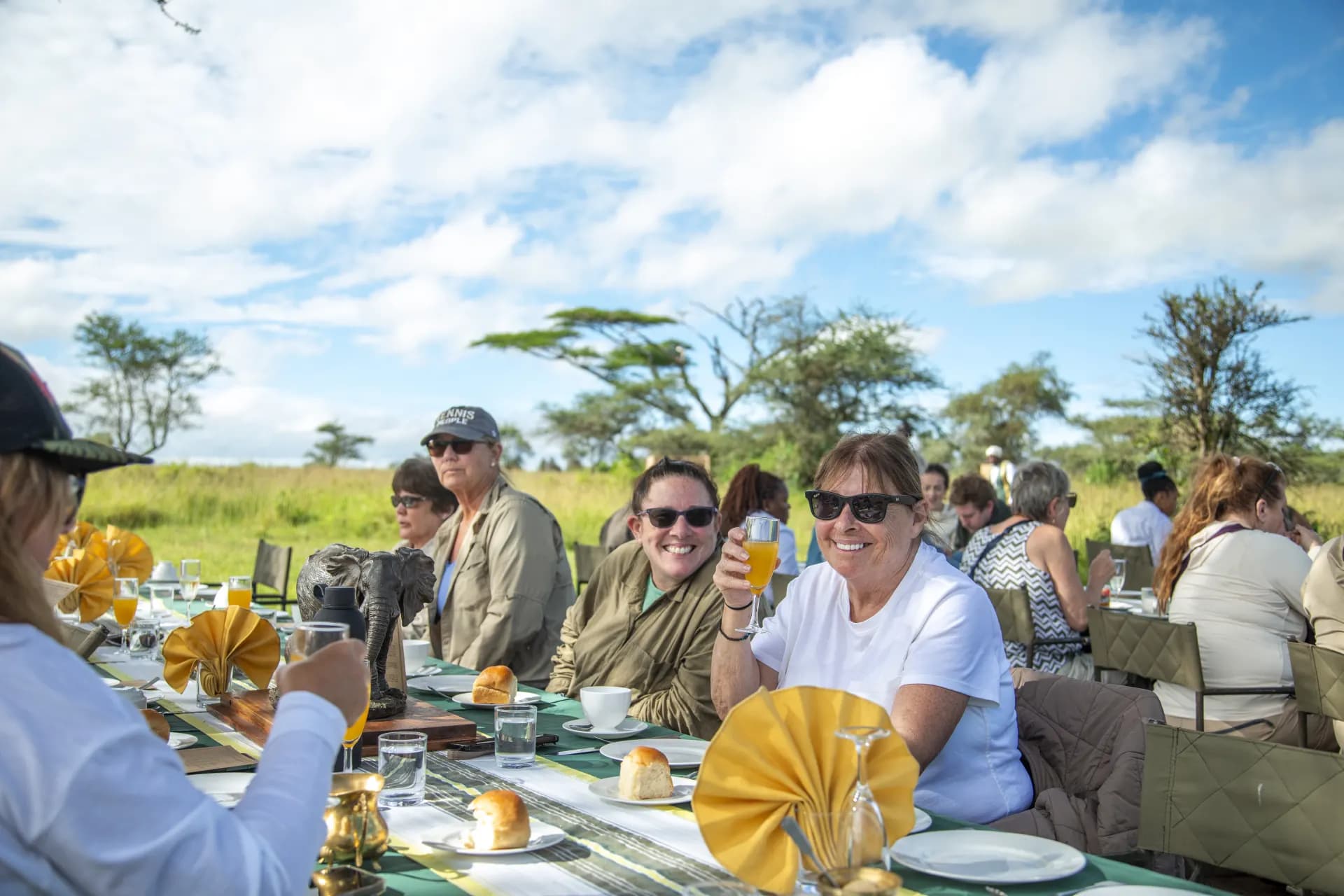
- A roughly hour-long dawn flight drifting at treetop height over the plains and any herds below
- Landing followed by a champagne bush breakfast laid out on the open savanna
- Booked well ahead — balloon capacity is limited and sells out on popular dates
- Available as an optional add-on, priced separately from your base itinerary
FAQ
Serengeti Safari Questions
The Serengeti Is Enormous. Your Route Shouldn't Guess.
Share your dates and the EXG team will tell you honestly where the herds should be, which sector to base in, and what it costs — before you commit.