
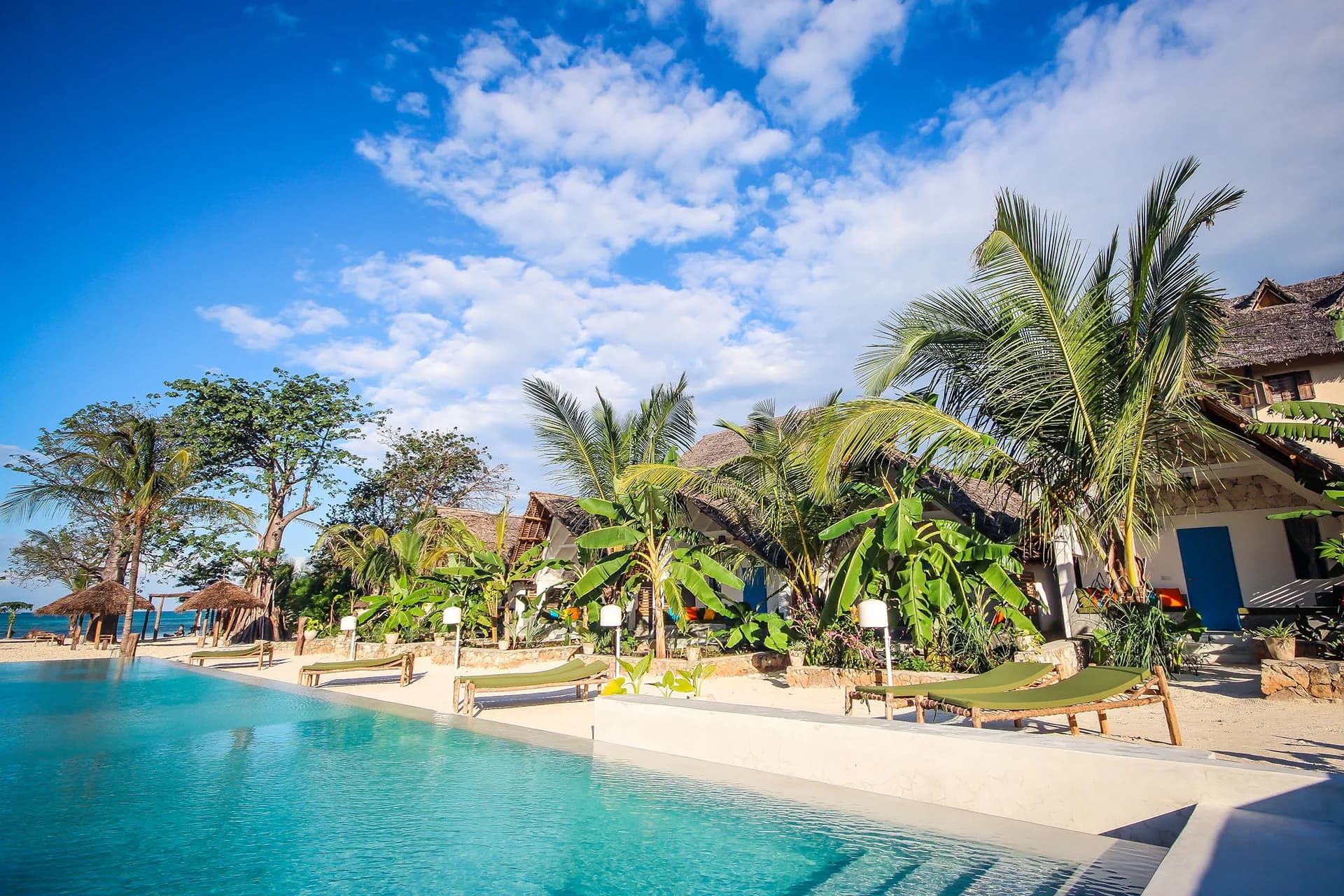
End the Safari the Way You'll Want to Remember It.
After a week of dawn game drives, Zanzibar is the exhale — white-sand beaches, warm Indian Ocean water, and Stone Town's centuries of Swahili history, all a short flight from the Serengeti's airstrips.
Safari + beach routing · Flights and transfers handled · U.S. + Tanzania planning team
Quick Answer
A Beach Finish, One to Two Hours From the Safari.
Zanzibar is a Tanzanian island in the Indian Ocean, a one-to-two-hour flight from the Serengeti's airstrips or Arusha. Stone Town, its old city, is a UNESCO World Heritage Site, and white-sand beaches and coral reefs ring the coast.
Most travelers add three to four nights after safari; June–October and December–February are the driest months.
Flight From Safari
1–2 Hours
Stone Town
UNESCO World Heritage Site
Typical Stay
3–4 Nights
Driest Months
Jun–Oct & Dec–Feb
The Beach Finish
Why Do Most Safaris End on Zanzibar?
A safari is wonderful and demanding in equal measure: early alarms, long drives, constant motion. Flying home straight from the bush means landing in the U.S. more tired than when you left. Zanzibar fixes the shape of the trip — three or four nights where the only decision is lunch.
The logistics are the easy part. Zanzibar sits just off the Tanzanian coast, one short domestic flight from the parks, so no extra country, visa, or airline is involved. Morning game drive, afternoon ocean — same day.
- 1–2 hour flight from Serengeti airstrips or Arusha
- An archipelago — Unguja (the main island), Pemba, and smaller islets
- Calm lagoons, powdery beaches, and reef snorkeling
- Swahili culture, spice farms, and Stone Town's old city

The Beach Finish
A Look at the Beach Resorts


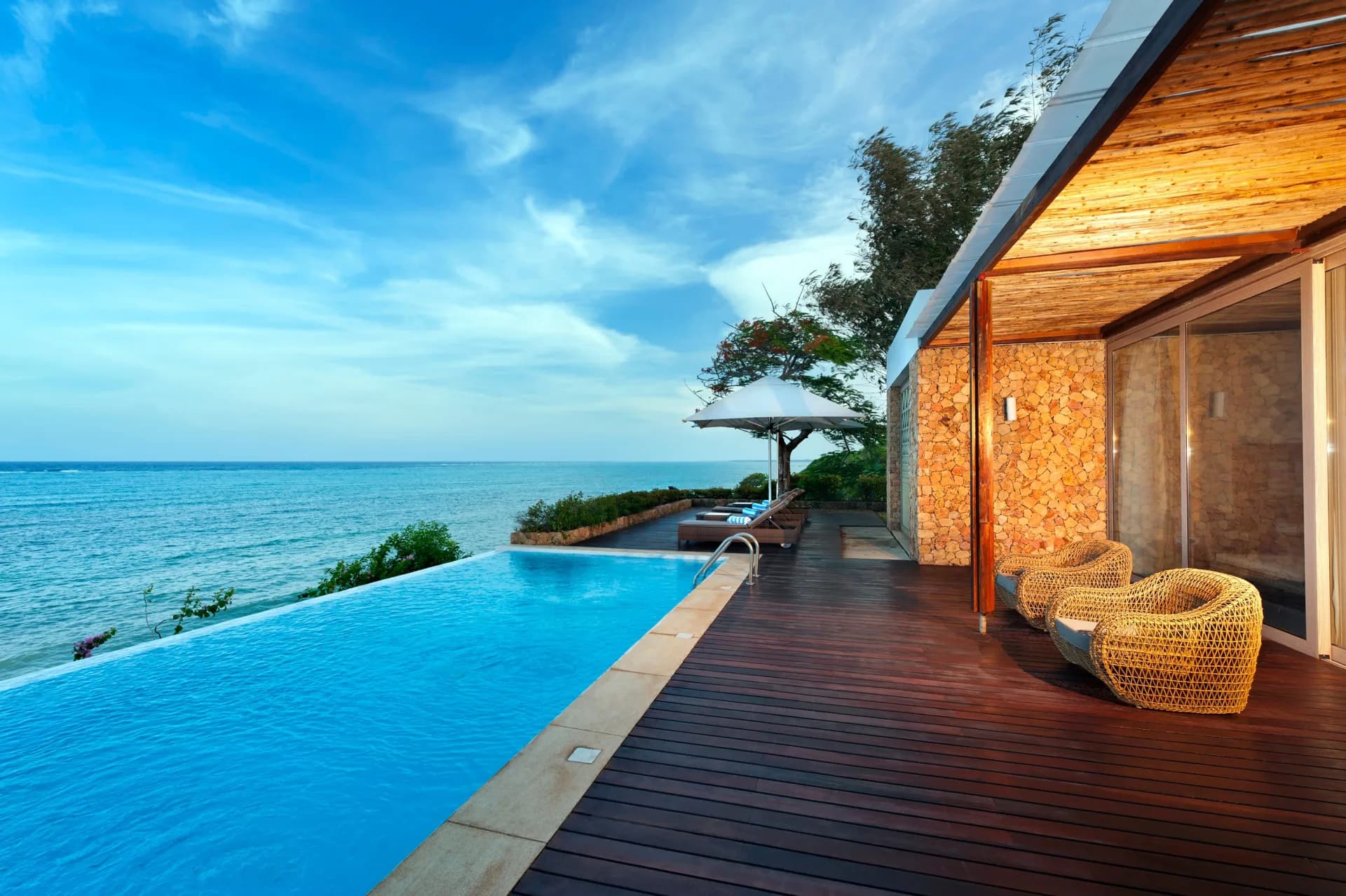
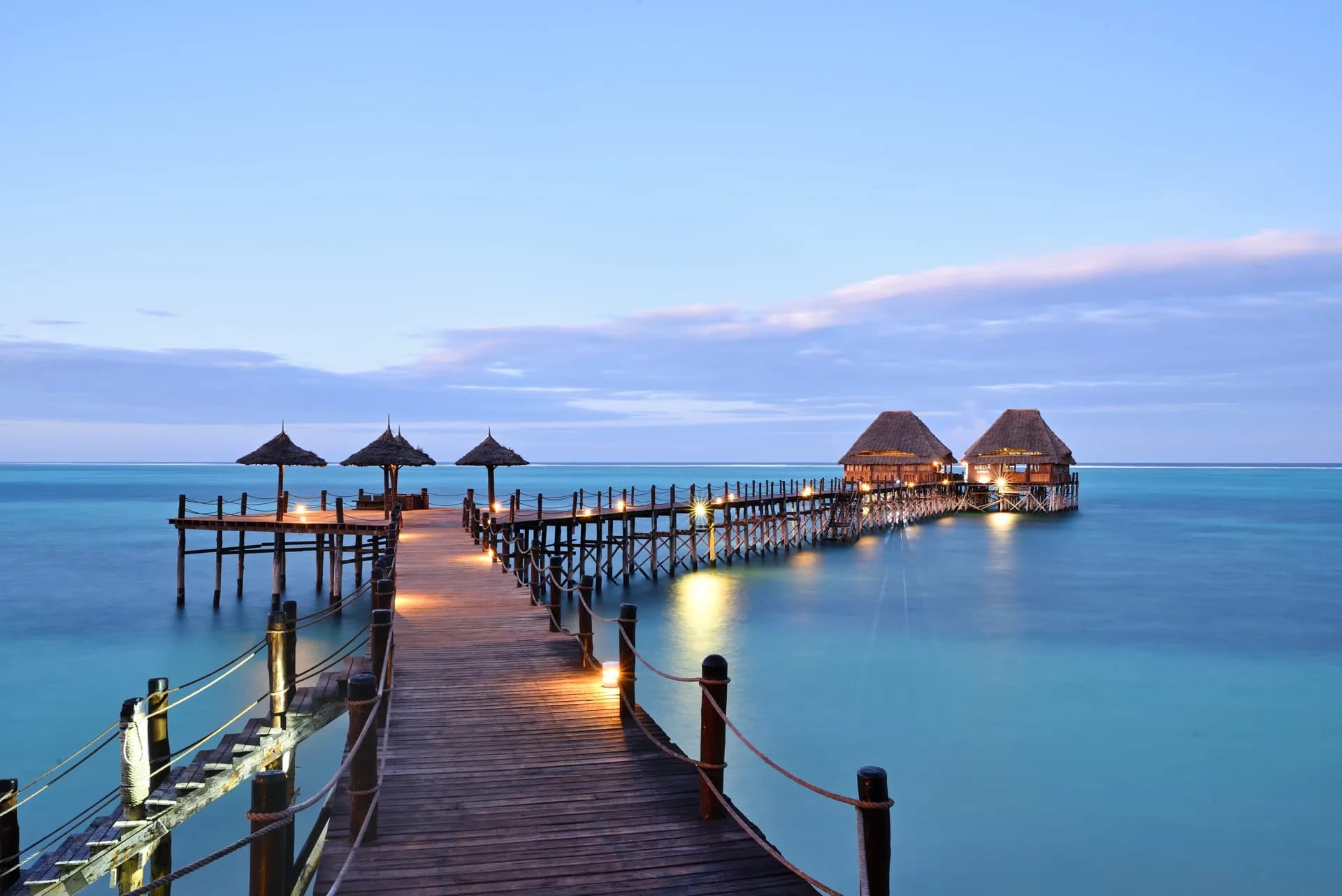

For Honeymooners
A Private Table, Just for Two
Zanzibar is where most honeymoons end, and where the trip's most private moments usually happen. Beach resorts here can arrange a table set apart from the main restaurant — an overwater pavilion or a stretch of sand — for a sunset dinner that belongs only to the two of you.
EXG builds this kind of evening into honeymoon itineraries alongside the beach nights and spice-farm days, so the romance doesn't stop when the safari ends.
Beyond the Beach
What Is There to Do on Zanzibar Besides the Beach?
More than most beach destinations can claim. Zanzibar spent centuries at the center of Indian Ocean trade, and the island still carries that history in its streets, farms, and food.
Stone Town
Zanzibar's old city — a UNESCO World Heritage Site of carved wooden doors, narrow alleys, and rooftop views, shaped by centuries of African, Arab, Indian, and European trade.
Spice farms
The island earned its name as the Spice Island growing cloves, cinnamon, nutmeg, and vanilla. A half-day farm tour is the best-smelling history lesson in Tanzania.
Reefs & marine life
Coral reefs ring the coast with sea turtles, reef fish, and dolphins. Snorkeling trips and dive days run from most beach areas; visibility is best in the dry months.
Dhow sunsets & Jozani Forest
Sail a traditional wooden dhow at sunset, then meet the rare red colobus monkey — found only on Zanzibar — in Jozani-Chwaka Bay National Park.
A 4-Night Flow
How Four Zanzibar Nights Usually Unfold
Day 1
Fly in from the parks
Morning game drive, midday flight, feet in the Indian Ocean by late afternoon. The gear bag stays closed for good.
Day 2
Stone Town & spices
A guided morning through the old city's alleys and markets, then a spice farm on the drive to your beach hotel — culture handled, appetite earned.
Day 3
The ocean day
Snorkeling over the reefs, a dhow sail at sunset, or dolphins and Jozani Forest's red colobus monkeys for the wildlife-minded.
Day 4
Nothing, on purpose
The empty day is the point. Beach, pool, a long lunch — the buffer that makes the flight home feel like an ending, not an escape.
Timing
When Is the Best Time to Visit Zanzibar?
Zanzibar's seasons track the mainland's, which is why the safari-plus-beach combination works so cleanly.
Dry season
June – October
Warm, dry, and breezy — and it lines up exactly with peak safari season. The default window for most U.S. travelers.
Short dry window
December – February
Hotter and more humid, but reliably sunny. Pairs naturally with a calving-season safari at Ndutu in January–February.
Long rains
March – May
The months to skip for a beach stay — heavy rain and closed properties. November's short rains are lighter and more gamble-worthy.
FAQ
Zanzibar Questions
Finish the Trip Rested, Not Rushed.
Tell us your dates and travel style. The EXG team will pair the right safari route with the right Zanzibar coast — flights and transfers included in the plan.